
 English
 French
 Russian
 Chinese (Simplified)
 Spanish
 German


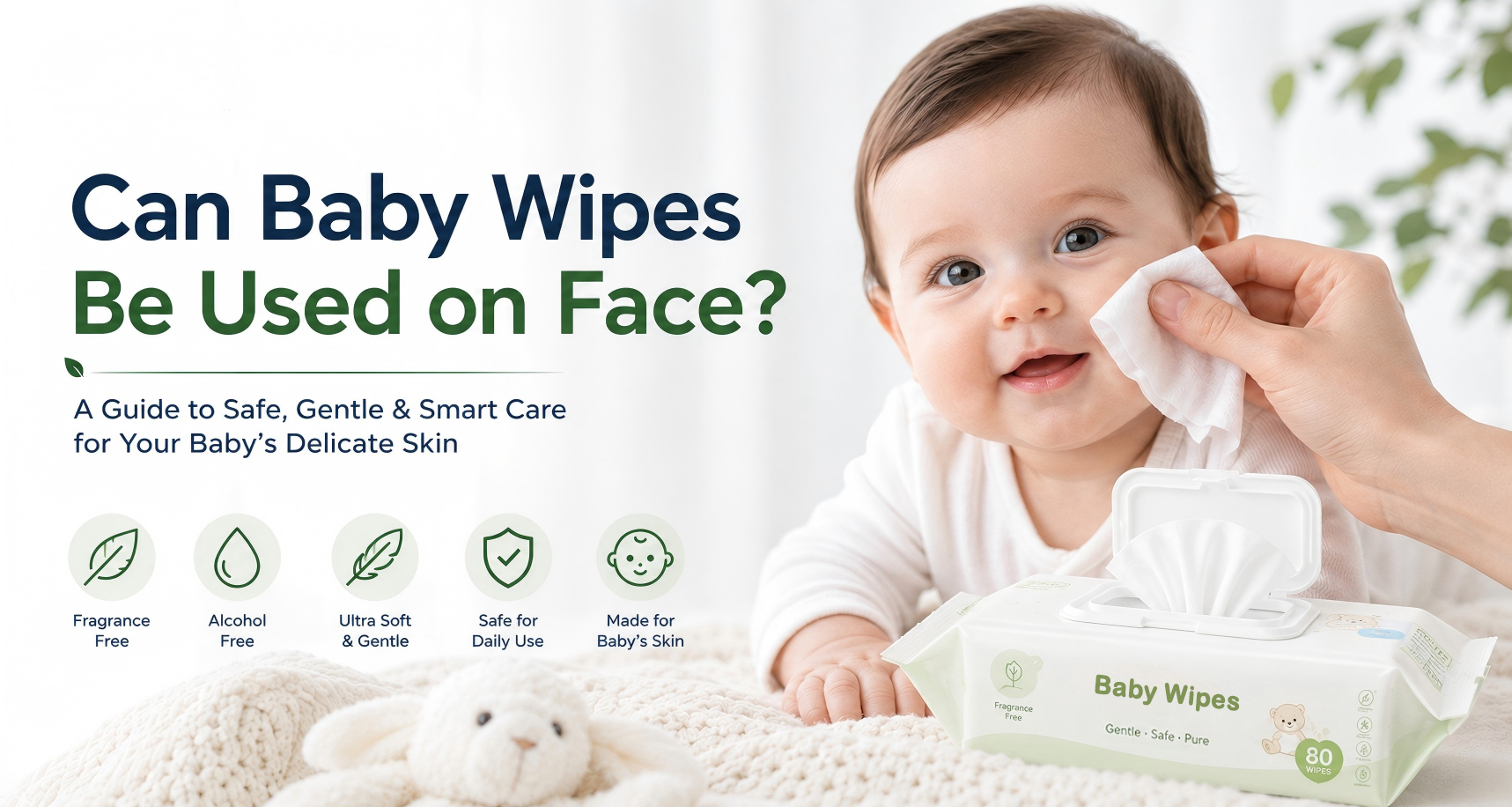
Baby wipes are commonly used for more than diaper changes. Parents may also use them to clean a baby’s hands, cheeks, neck folds, or small messes after feeding.
But can baby wipes be used on a baby’s face?
Yes, some baby wipes can be used on the face—but not every baby wipe is suitable for facial use. The key factors are the product’s intended use, ingredients, fabric softness, and how your baby’s skin responds.
For babies with sensitive or eczema-prone skin, choose a gentle, fragrance-free formula and avoid repeated rubbing.
Can You Use Baby Wipes on a Baby’s Face?
In everyday situations, a suitable baby wipe can gently remove:
-
Milk, food, or saliva.
-
Light dirt after outdoor activities.
-
Small spills after feeding.
-
Sweat or residue while traveling.
However, facial skin can be more sensitive than other areas of the body. A wipe designed mainly for diaper changes should not automatically be considered suitable for the face.
Before use, check the packaging and directions. If the manufacturer states that the product is suitable for facial or general skin cleansing, it is a more appropriate choice.
In short, “baby wipe” does not automatically mean “face wipe.”
What Makes a Baby Wipe Suitable for the Face?
When choosing baby wipes for face cleaning, look beyond the words “baby” and “gentle” on the package.
- Gentle formula
A baby’s skin barrier is still developing, and some babies may react to specific ingredients. For routine facial cleaning, a simple formula with fewer unnecessary additives is often preferable.
- Fragrance-free
For sensitive or eczema-prone skin, fragrance-free baby wipes are generally a better choice than scented products.
The American Academy of Dermatology recommends choosing fragrance-free rather than merely “unscented” products. “Unscented” products may still contain masking fragrances.
- Alcohol-free
Alcohol may feel drying or irritating on delicate skin, particularly when the skin barrier is already compromised. For everyday facial cleaning, many parents choose alcohol-free baby wipes.
- Soft, low-lint fabric
The wipe material matters as much as the lotion formula. A soft, smooth nonwoven fabric can reduce friction during cleaning. Ordinary food or milk residue should not require scrubbing.
- Clear ingredient information
Parents should be able to find the ingredient list and usage instructions on the package. The FDA advises consumers with sensitive skin or allergies to check product ingredients before use.
Can Baby Wipes Be Used Around the Eyes and Mouth?
Around the mouth
A suitable baby wipe can generally be used to remove milk, food, or saliva from the skin around the mouth.
Wipe gently and avoid repeated rubbing. If residue has dried, soften it first rather than scrubbing the skin.
Around the eyes
Use extra care around the eyes.
Do not use ordinary baby wipes directly on the eyeball or inside the eyelid. If you need to clean the area around the eyes, follow the product instructions and avoid direct eye contact. A clean, soft cloth moistened with water may be a safer option when the product is not intended for use near the eyes.
Some baby-wipe labels specifically instruct users to keep the product away from the eyes, ears, and mouth.
Are Baby Wipes Safe for Newborns?
Some baby wipes may be suitable for newborns, but newborn skin requires particular care. A developing skin barrier can be more vulnerable to irritation.
When choosing wipes for newborns or sensitive skin, consider:
-
Fragrance-free formula.
-
Alcohol-free formula.
-
Soft, gentle fabric.
-
Short and clearly listed ingredients.
-
Product instructions intended for babies.
-
Clear warnings and usage directions.
For premature babies or infants with significant skin problems, follow advice from a healthcare professional. For babies with eczema, dermatology guidance generally recommends gentle cleansing and fragrance-free products.
When Should You Stop Using Baby Wipes?
Stop using the wipes if your baby develops:
-
Redness.
-
Burning or stinging.
-
Persistent dryness.
-
Itching.
-
Swelling.
-
A rash.
-
Cracked or damaged skin.
The FDA advises stopping use and contacting a healthcare provider if wipes cause a rash, redness, irritation, or burning where they contact the skin.
If the reaction includes significant swelling, blistering, discharge, or signs of infection, seek medical advice promptly.
Frequently Asked Questions
1. Can baby wipes be used on a newborn’s face?
Yes, some baby wipes can be used on a newborn’s face when they are intended for gentle baby-skin cleansing. Choose a fragrance-free, alcohol-free formula when appropriate, and monitor the baby’s skin closely.
2. Can you use baby wipes on a baby’s face every day?
Baby wipes can be used for everyday cleaning when needed, such as removing milk, food, saliva, or dirt. However, there is usually no reason to repeatedly wipe clean facial skin.
3. Are fragrance-free baby wipes better for the face?
For babies with sensitive or eczema-prone skin, fragrance-free products are generally preferred. Remember that “unscented” does not necessarily mean fragrance-free.
Final Answer: Can Baby Wipes Be Used on the Face?
Yes—but choose the right product and use it gently.
Baby wipes can be convenient for cleaning a baby’s face after feeding, playing, or while traveling. However, not every baby wipe is designed for facial use.
For sensitive facial areas, look for:
-
A gentle formula.
-
Fragrance-free and alcohol-free ingredients.
-
A soft, low-lint fabric.
-
Clear ingredient information.
-
Directions that support facial or general skin cleansing.
Avoid the eyes, do not scrub, and stop using the wipes if redness, itching, dryness, or irritation develops.
At Biokleen, we believe a quality baby wipe is about more than moisture. The substrate, lotion formula, preservation system, packaging, and quality-control process all contribute to a better wiping experience.
For wipes intended for sensitive areas such as the face, every detail matters.
This article provides general baby-care information and does not replace advice from a pediatrician or dermatologist.