
 English
 French
 Russian
 Chinese (Simplified)
 Spanish
 German



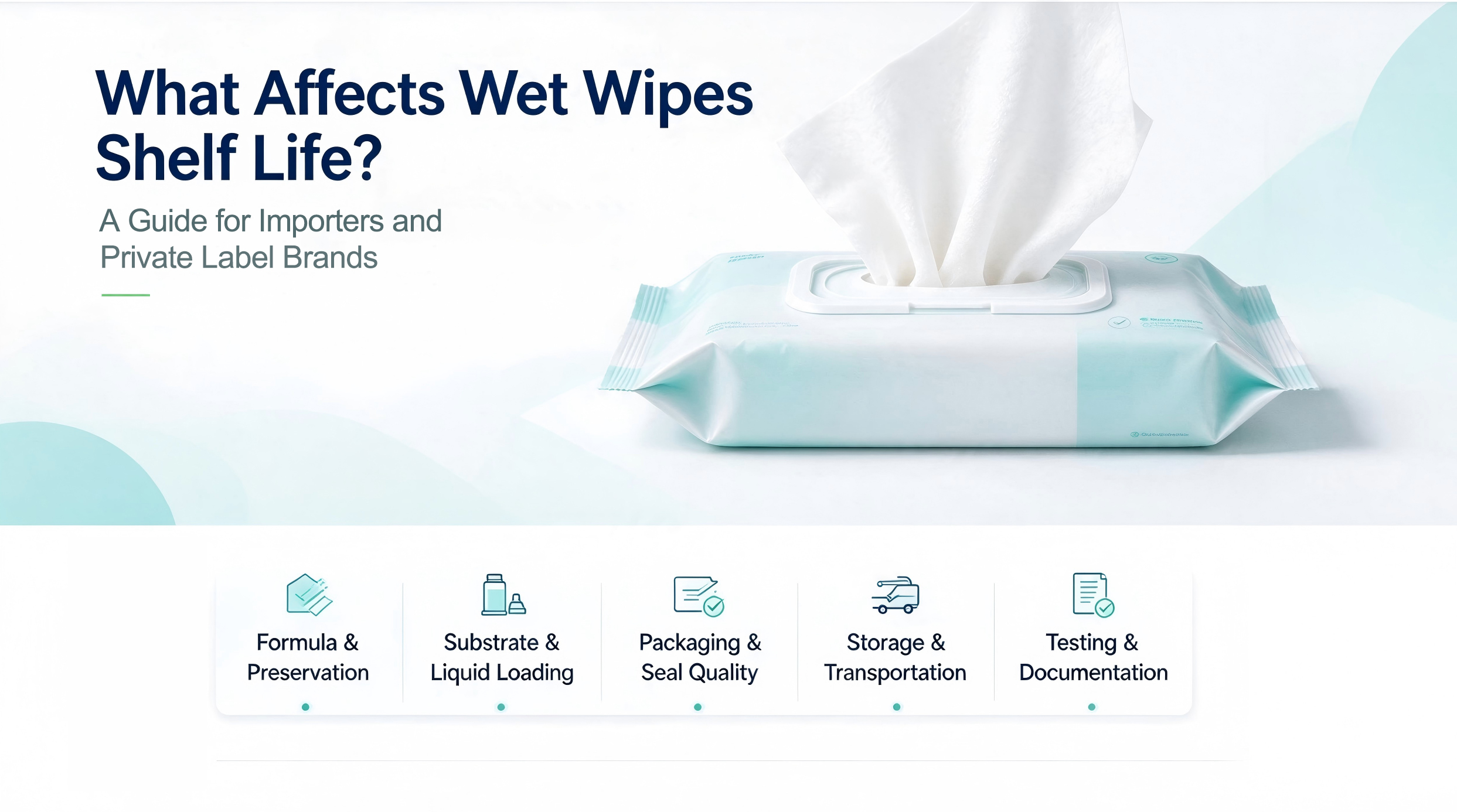
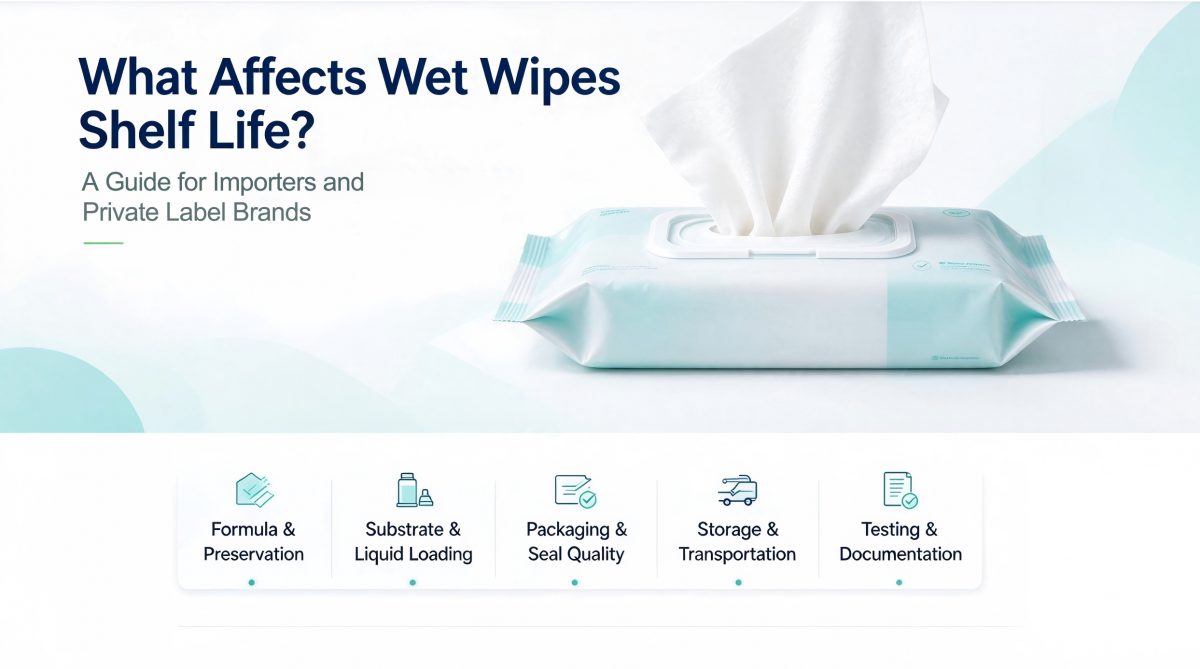
Wet wipes may look simple, but their shelf life depends on formulation, preservation, packaging, manufacturing, and storage conditions. For importers and private label brands, understanding these factors helps reduce quality risks and avoid costly product issues.
A shelf life claim should be supported by testing and technical data—not assumptions.
1. Formula and Preservation
The liquid formula is the foundation of wet wipes stability. Water content, pH, surfactants, emollients, fragrance, and botanical extracts all affect how well the product remains stable over time.
A suitable preservative system is essential, especially for alcohol-free and mild formulations. Importers should ask suppliers for preservative efficacy testing, such as ISO 11930, as well as stability data that support the claimed shelf life.
“Preservative-free” can be a strong marketing claim, but it may require stricter manufacturing controls and, in some cases, a shorter shelf life.
2. Substrate and Liquid Loading
The nonwoven substrate affects moisture retention, wipe strength, softness, and dispensing performance. Fiber type, fabric weight, embossing, and fold pattern should match the intended application.
Liquid loading is equally important. Too little liquid can cause wipes to dry out, while too much may lead to leakage or poor dispensing.
For private label wet wipes, the substrate, formula, folding method, and packaging should be developed as one integrated system.
3. Packaging and Seal Quality
Packaging protects wet wipes from moisture loss, contamination, and environmental exposure. Barrier film quality, seal strength, lid design, and resealable label performance all influence shelf life.
For export programs, packaging should also be tested under transport conditions, including temperature changes, vibration, pressure, and humidity.
4. Storage and Transportation
Even a well-formulated product can deteriorate if stored incorrectly. High temperatures, freezing conditions, direct sunlight, and humidity fluctuations can shorten shelf life or affect product quality.
Importers and distributors should store unopened cartons in a cool, dry place and follow a first-in, first-out inventory system.
5. Testing and Documentation
A credible shelf life claim should be based on evidence. Buyers should request:
-
Real-time and accelerated stability testing
-
Preservative efficacy or challenge testing
-
Packaging compatibility data
-
Transport simulation results
-
Quality control documents for each shipment
These documents help confirm that the product remains safe, stable, and functional throughout its intended shelf life.
Key Questions to Ask Your Supplier
-
What shelf life can you support for this formula and packaging?
-
What preservative system will be used?
-
Can you provide real-time and accelerated stability reports?
-
What storage conditions do you recommend?
Final Takeaway
Wet wipes shelf life depends on the balance between formulation, preservation, substrate, packaging, and supply-chain conditions. A reliable private label wet wipes manufacturer should provide clear technical data and help brands choose a realistic, compliant shelf life.
Planning a private label wet wipes program? Contact our team to discuss custom wet wipes, packaging, shelf life testing, and export-ready production.