
 English
 French
 Russian
 Chinese (Simplified)
 Spanish
 German



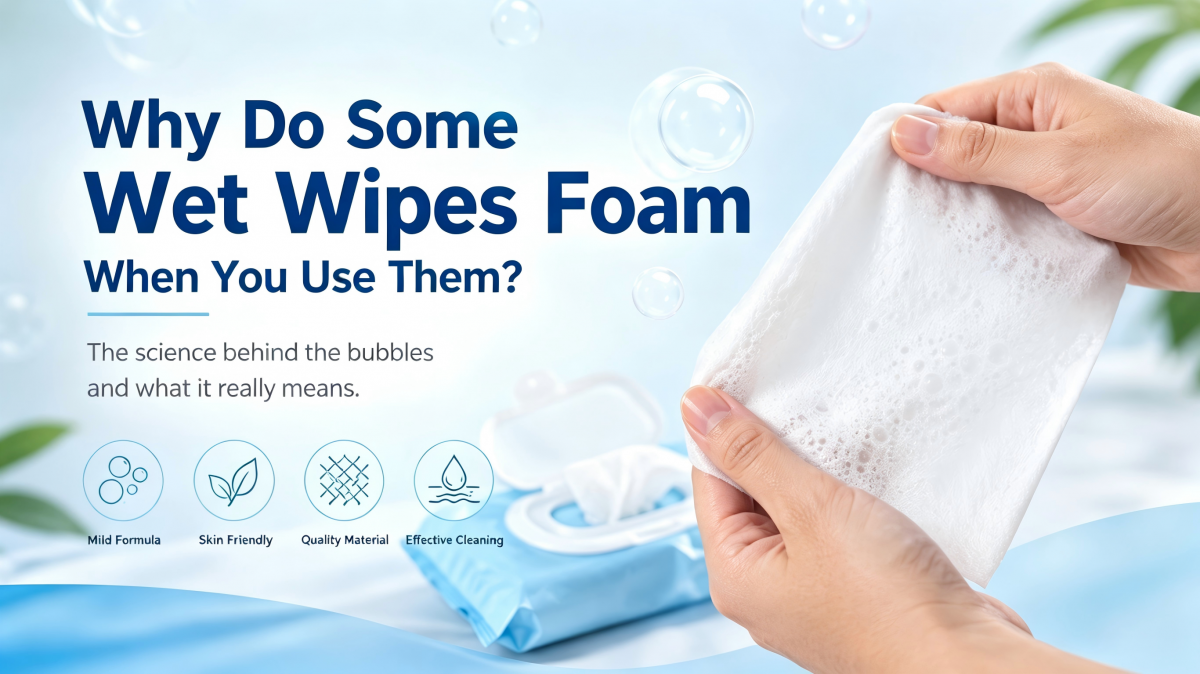
Have you ever pulled a fresh wet wipe out of the pack, wiped your hands or your baby’s skin, and noticed a light layer of white foam or bubbles left behind?
It’s a common moment of confusion. You might wonder: Is this soap? Did I buy a defective batch? Do I need to rinse this off?
At Biokleen, we believe you should know exactly what’s happening on your skin. So, let’s pull back the curtain on the “mystery of the foamy wipe” and find out what those bubbles actually mean for you.
The Short Answer: It’s All About Surfactants
The foam you see isn’t usually “soap” in the traditional sense, but it is caused by ingredients called surfactants.
Surfactants (short for surface-active agents) are the hard workers in any wet wipe formula. Their job is to break the surface tension of water, allowing the liquid to lift dirt, oils, and impurities off the skin more effectively.
When you pull a wipe out or rub it against a surface, air gets trapped in the liquid. If the formula contains certain surfactants, that air creates tiny bubbles—resulting in that “foamy” look.
Why Do Some Wipes Foam More Than Others?
Not all wipes are created equal. The amount of foam usually depends on two things:
1. The Type of Ingredients Used
Many mass-market wipes use synthetic surfactants like SLS (Sodium Lauryl Sulfate) because they are cheap and create a rich lather. However, these can be harsh and often leave a sticky residue that feels like it needs to be washed off.
2. The Concentration
If a wipe is “extra bubbly,” it might simply have a higher concentration of cleaning agents. While this sounds like it would be “cleaner,” it often means more chemicals are being left to dry on your skin, which can lead to irritation—especially for newborns or those with sensitive skin.
Is the Foam Dangerous?
Generally speaking, no. The foam itself isn’t “toxic.” However, it can be a sign of a formula that isn’t as “clean” as it claims to be.
If a wipe foams excessively, it usually indicates:
-
Potential Residue: The foam can leave a film on the skin that feels tacky or sticky once dry.
-
Skin Irritation: For people with eczema or sensitive skin, the chemicals that cause heavy foaming can strip away natural oils, leading to dryness or redness.
-
The “Double Work” Problem: If you feel like you need to rinse your skin with water after using a wipe, the wipe isn’t doing its job efficiently.
The Biokleen Difference: Why Our Wipes Feel Different
At Biokleen, our philosophy is “Clean without Compromise.” We’ve spent years perfecting a formula that balances effective cleaning with a gentle, residue-free finish.
-
Plant-Based Surfactants: We skip the harsh synthetic suds. Instead, we use gentle, plant-derived ingredients that lift dirt without creating a bubble bath on your skin.
-
No Sticky Residue: Our wipes are designed to leave your skin feeling like you just used fresh water—clean, soft, and breathable.
-
Minimalist Formulas: We use high-purity water and skin-loving ingredients, reducing the “agitation” that causes foam in the first place.
Conclusion
In a competitive market, the sensory experience of the product—how it feels, smells, and looks during use—defines your brand’s reputation. By choosing a partner like Biokleen that understands the fine chemistry of low-foam solutions, you ensure that your customers remember the clean, not the bubbles.