
The Rise of the “Micro-Wipe”: Why Pocket-Sized Hygiene is the Next Big Retail Trend 0 (0)

In the evolving world of personal care, size creates value. For decades, the wet wipes industry was dominated by the “bulk” mentality—70 or 100-count packs designed for kitchen counters and nursery changing tables.

But have you ever tried stuffing a “brick” of wipes into a tailored suit jacket or a designer mini handbag? It doesn’t work.

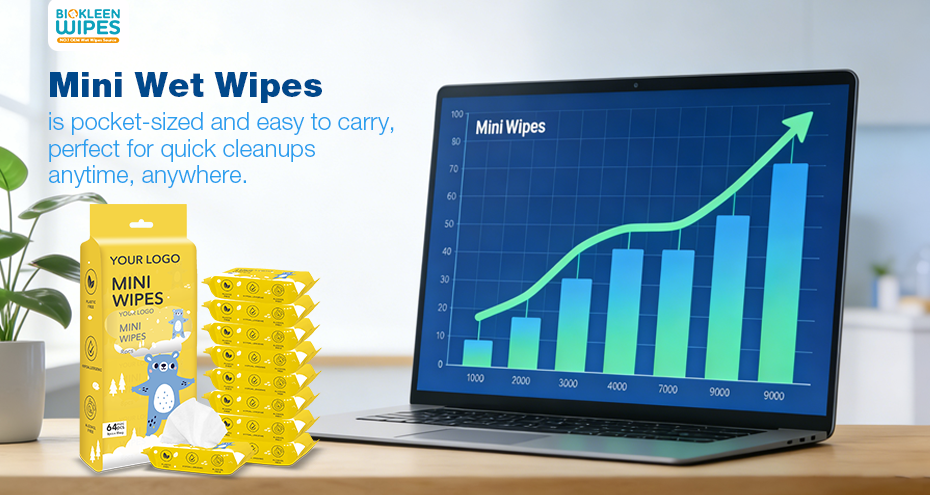
At BIOKLEEN, we identified a critical gap between consumer lifestyle and product design. The result is the BIOKLEEN Mini Series: a shift toward “Spatial Intelligence” in hygiene. Here is why the market is pivoting to pocket-sized powerhouses and why your brand should be ready.


The Everyday Carry (EDC) Revolution

The modern consumer is mobile. Whether it is a business traveler moving between airports or a minimalist urban commuter, the demand for “On-the-Go Hygiene” has skyrocketed.

The concept of EDC (Everyday Carry) prioritizes items that are functional, compact, and aesthetically pleasing. Consumers no longer view wet wipes merely as cleaning tools; they view them as essential accessories. They demand products that fit seamlessly into:

  • Evening clutches and mini purses
  • Suit pockets and wallets
  • Gym kits and laptop bags

The Problem with Traditional Travel Packs
Standard “travel packs” (usually 10-20 count) are often still too bulky for modern fashion trends. They create unsightly bulges in pockets and lose moisture before the pack is finished. The market needed a true mini solution.


BIOKLEEN Mini Series: Defined by Design

Our Mini Series isn’t just a smaller version of a big pack; it is a ground-up redesign focused on the user experience.

  • Invisible Utility: Roughly the size of a credit card holder, these packs offer discrete portability.
  • The 8-Sheet Sweet Spot: Through consumer research, we found that 8 sheets are the perfect volume for a single day trip. This ensures the last wipe is as fresh as the first, eliminating the waste of dried-out bulk packs.
  • Premium Aesthetics: We moved away from the “medical” look. The Mini Series features pearl-patterned spunlace fabric and sleek packaging that looks at home next to high-end cosmetics.


Why Retailers and Buyers Are Betting on “Mini”

For procurement managers and retailers, the shift to mini wipes offers tangible business advantages. It is not just about cuteness; it is about shelf efficiency.

  1. High Impulse Purchase Rate: Placed at checkout counters (POS), the low price point and high utility make Mini Wet Wipes an effortless add-on for customers.
  2. Optimized Shelf Density: The Mini Series saves up to70%more space compared to traditional packs. This allows retailers to maximize revenue per square inch of shelf space.
  3. Accelerated Consumption Loop: Smaller pack sizes encourage faster usage and more frequent repurchase cycles compared to slow-moving bulk inventory.


Customization & Private Label Opportunities

As a leading wet wipes manufacturer, BIOKLEEN understands that your product must reflect your brand identity.

The Mini format is an excellent canvas for private label brands. Whether you are a hotel chain looking for premium amenities, a fashion retailer seeking branded accessories, or a beauty brand expanding your SKU list, the Mini wipe is versatile.

Bespoke Wet Wipes Solutions for Your Brand
We offer extensive OEM/ODM services to tailor the Mini Series to your needs:

  • Formula Customization: From RO Pure Water to Aloe Vera enriched or Alcohol-Free antibacterial solutions.
  • Packaging Design: Matte finishes, metallic foils, or eco-friendly biodegradable films.
  • Sheet Quality: Adjustable weights (gsm) and textures (plain or pearl) to match your price positioning.


Conclusion: Completing the Matrix – From Home to On-the-Go

Bulk packs remain the cornerstone of household hygiene, office maintenance, and baby care. They are irreplaceable for stationary use. However, when the consumer steps out the door, the BIOKLEEN Mini Series takes over as the perfect companion.

The real market winners are brands that offer a Full-Scenario Solution—providing reliable bulk options for the home and sleek, portable options for the road.

The Mini Series is not a replacement for your standard packs; it is the missing piece of the puzzle. It allows your brand to capture the high-frequency mobile usage scenarios that bulk packs simply cannot reach.

Ready to perfect your hygiene portfolio?

You don’t have to navigate this trend alone. BIOKLEEN has already successfully engineered and launched custom Mini Series for over 10 global brands.

We are particularly proud of our success in the Japanese market—a region famous for its exacting quality standards and demand for compact innovation. If our Mini Series can thrive there, it can thrive anywhere.

Contact the BIOKLEEN team today. Let’ s discuss how to balance your product line with both household bulk essentials and the trending Mini Series, backed by our proven global experience.
Why Aldi’s Private-Label Success Signals a New Era for Retail — and Why Now Is the Time to Build Your Own Brand 0 (0)

Across global retail, one shift is impossible to ignore: private-label products are rising faster than national brands. And when we look at the industry leaders, the message becomes even clearer — those who master private label will own the next decade of retail.

Among all global retailers, Aldi is the strongest proof.

Aldi: The Global Benchmark for Private-Label Excellence

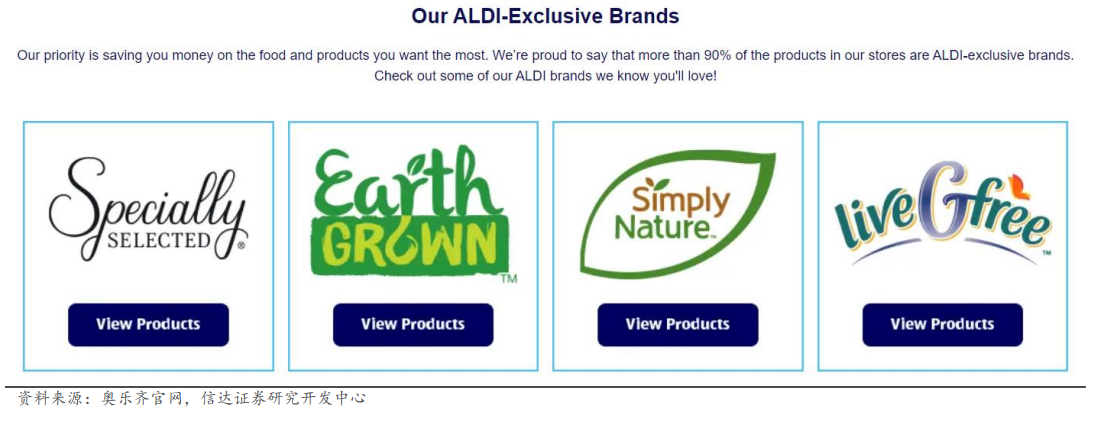
Aldi’s model is built on simplicity, efficiency, and a highly integrated supply chain — and at the center of that model lies private label. Today, 93% of Aldi’s assortment is private label, a level most retailers can only dream of. This isn’t merely a merchandising choice; it is an entire business philosophy.

Other global players have followed the same direction:

Costco: 30–40% private-label (Kirkland Signature)

Sam’s Club: 20–30% private-label

Aldi: 93% private-label

(Source: retailwatch.net)

The pattern is unmistakable:
Retailers that invest in private label consistently achieve higher margins, stronger customer loyalty, and tighter supply-chain control.


Why Private Label Requires Higher Capabilities from Retailers

As private label expands, retailers face rising expectations. We believe the following three capabilities are now essential for success:

1. Supply Chain Integration and Direct Sourcing: The most critical factor is the ability to build a robust, integrated supply chain. Increasing direct sourcing and fostering deep, collaborative relationships with manufacturers allows retailers to control quality, manage costs, and improve supply stability. This move away from traditional middlemen is fundamental to achieving the price competitiveness that defines the discount model.

2. Product Development and Curation: A successful private label requires sophisticated product development and selection capabilities. It is no longer about creating a copycat product. It is about identifying consumer needs, innovating on formulas and features, and curating a selection that represents quality and value. This is how a private label transitions from being a product to being a trusted brand.

3. Building Brand Recognition: A private label is, at its core, a brand. It requires investment in packaging, storytelling, and marketing to build awareness and trust. Consumers must come to recognize and prefer your brand over national competitors. This brand equity is what drives repeat purchases and creates lasting loyalty.、

The path is not exclusive to discounters. Retail giants like Costco and Sam’s Club have also made private labels a cornerstone of their strategy, with their own brands (Kirkland Signature and Member’s Mark) accounting for approximately 30-40% and 20-30% of sales, respectively.

The message is clear: the future of retail is intertwined with the strength of its private brands. The challenges in supply chain, product development, and brand building are significant, but they are also the very factors that create a defensible competitive advantage. The time to cultivate your own private brand is now.


What This Shift Means for the Wet Wipes Industry

In the wet wipes industry, the rise of private label is even more pronounced.

Retailers today are no longer interested in generic or undifferentiated products. They demand:

Cleaner, minimalist formulas (EDI water wipes, Disinfecting wipes)

Sustainable materials (biodegradable wipes, bamboo wet wipes, flushable wipes)

Category-specific SKUs (baby wipes, facial wipes, pet wipes, gym wipes, household wipes)

Flexible OEM/ODM customization

Packaging aligned with their brand identity

In recent years, we have seen a surge in private-label inquiries from global retailers, pharmacy chains, and e-commerce brands. Many who once purchased standard wipes now want fully tailored product lines.

Private label is no longer a “low-cost alternative.”
It has become the retailer’s core value proposition.


Why Now Is the Best Time to Build Your Own Private Label

Whether you are a retailer, distributor, or fast-growing e-commerce brand, now is the ideal time to develop your own private label because:

  • Consumers trust private label more than ever
  • Margins are significantly higher than reselling national brands
  • You control pricing, inventory, and product storytelling
  • Your brand becomes harder to replace
  • Supply-chain partners (like us) now support flexible MOQ, fast R&D, and custom formulas

In other words:
Private label protects your business in a competitive, margin-tight market.


Final Thought

Aldi’s success is not an accident — it is a roadmap.
Retailers that embrace private-label development today will define the next chapter of global retail.

If you are considering developing your own baby wipes, household wipes, beauty wipes, or pet wipes, now is the right time. The market is shifting fast — and the brands that act early will gain the greatest advantage.